← 뒤로

제약이론(TOC) 소개

TOC 방법론 완벽 가이드 — 기본 원리부터 고급 응용까지.

01

기본 원리

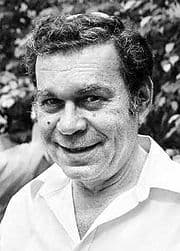
Dr. Eliyahu M. Goldratt
1947 – 2011

Eliyahu Moshe Goldratt (1947–2011) was an Israeli physicist, author, and educator whose ideas transformed how organisations understand performance. Born in Israel, he earned a BSc in Physics from Tel Aviv University and a PhD from Bar-Ilan University. Goldratt himself resisted the label of "guru" — he saw himself as a scientist whose domain happened to be organisations, not physics.

In 1984, he published The Goal — a business novel following a plant manager racing to save his factory. It became one of the most widely read management books in history, translated into 35+ languages with over 10 million copies sold. It remains required reading in business schools and boardrooms worldwide.

Goldratt spent his life building and refining the Theory of Constraints, relentlessly challenging organisations to think more clearly. He passed away in June 2011 and was buried in Israel. His legacy continues through the global TOC community — practitioners, researchers, educators, and organisations in over 40 countries who carry his work forward and apply it to change how the world thinks about performance.

The Theory of Constraints, developed by physicist-turned-management-guru Dr. Eliyahu M. Goldratt, rests on a single profound insight: every system — no matter how complex — has very few root causes generating most of its problems, and one constraint limiting its performance at any moment.

Finding and acting on that constraint produces disproportionate improvement everywhere else. This is Inherent Simplicity — not a simplistic view of reality, but the recognition that reality, properly understood, is far simpler than it appears.

Inherent Simplicity
Reality is not as complex as it appears. Complex-looking problems have very few root causes. When a situation looks irreducibly complex, the diagnosis is wrong.
People Are Good
Dysfunction is caused by conflicts embedded in systems and policies — not by bad people. Always look for the system conflict forcing good people into bad behaviour.
Every Conflict Can Be Removed
No genuine dilemma is truly unsolvable. Every conflict between two valid needs has an underlying false assumption that can be identified and challenged.
There Is Always a Better Way
As long as a constraint exists, untapped potential exists. Current state is never optimal — the only limit is our willingness to look for the injection.
Question 1
What to change?
Identify the constraint and its root cause
Question 2
What to change to?
Design the injection that breaks the core conflict
Question 3
How to cause the change?
Implementation sequence that overcomes resistance
02

집중개선 5단계

01
IDENTIFY the constraint
Find the single resource, policy, or paradigm limiting the system's performance. The real constraint is rarely the apparent one — visible bottlenecks often mask a policy constraint.
02
EXPLOIT the constraint
Get maximum output from the existing constraint without additional investment. Eliminate constraint starvation, remove non-value-added work, and stop sending defects into the constraint.
03
SUBORDINATE everything else
All non-constraints must serve the constraint's needs — even when this makes them look "inefficient" by local metrics. This is the step most organizations fail because it requires changing local measurements.
04
ELEVATE the constraint
Only now invest in additional capacity at the constraint. Hiring, equipment, outsourcing — these are expensive and should only be done after exploitation is complete.
05
Do not let INERTIA become the new constraint
After elevating the constraint, it moves. Return to Step 1. Old policies and measurements become the new constraint if not revisited — this is where most successful implementations plateau.

Critical rule: Never skip from Step 1 to Step 4. Organizations constantly try to solve constraint problems by adding capacity (Step 4) before exploiting what they have (Step 2) or subordinating supporting resources (Step 3).

03

성과 지표

Three measurements replace cost accounting entirely. Every decision — from product mix to investment to pricing — is evaluated by its simultaneous impact on T, I, and OE.

T
Throughput
Revenue − Truly Variable Costs
The rate at which the system generates money through sales. TVC in manufacturing is almost always only raw materials — direct labor is fixed in the short run.
I
Inventory
All money invested in things to sell
Includes raw materials, WIP, and finished goods — valued at purchased cost only. No "value added." This prevents the distortion of capitalizing labor into inventory.
OE
Operating Expense
All money spent turning I into T
All fixed costs, semi-fixed costs, overhead. Labor belongs here. The decision hierarchy: increase T first, then decrease I, then decrease OE.

Decision hierarchy: Does it increase T? → Decrease I? → Decrease OE? An action that increases T by $1M while increasing OE $500K is profitable. Traditional cost accounting evaluates this incorrectly.

04

응용 분야

🏭
Manufacturing (DBR)
Drum-Buffer-Rope

The Drum sets the pace (the constraint's schedule). The Buffer protects the constraint from being starved. The Rope releases work only when the constraint is ready. Result: flow replaces push.

📊 Median: 70% lead time reduction, 68% throughput increase
📦
Distribution & Replenishment
TOC Replenishment

Replace forecast-driven push with consumption-driven pull. Small, frequent replenishments based on actual sales — simultaneously eliminating stockouts AND excess inventory.

📊 Median: 49% inventory reduction, dramatically higher availability
🗂️
Project Management (CCPM)
Critical Chain PM

Cut task estimates to 50%, identify the Critical Chain (resource-leveled longest path), add Project Buffers at the end. Manage by buffer consumption, not by task due dates.

📊 25-50% duration reduction, 80-95% on-time completion
🎯
Strategy (Mafia Offer)
Decisive Competitive Edge

Build an offer so good the customer's rational choice is to accept — based on a genuine operational advantage competitors cannot match without changing their fundamental model.

📊 New market share, premium pricing, sustainable differentiation
💰
Finance (Throughput Accounting)
T, I, OE Framework

Three measurements replace cost accounting: Throughput (rate of money generation), Inventory (money invested), Operating Expense (money spent). Every decision evaluated by impact on these three.

📊 Better product mix, better investment decisions, aligned incentives
🧩
Organizational Change (Thinking Processes)
CRT, EC, FRT, PRT, TT

Five logical tools for diagnosing any complex problem: the Current Reality Tree maps root causes; the Evaporating Cloud resolves conflicts; the Future Reality Tree validates solutions.

📊 Sustainable culture change, buy-in at every level
05

사고 프로세스

CRT
Current Reality Tree
Maps Undesirable Effects backward through cause-and-effect to find the single root conflict driving 70-80% of problems.
EC
Evaporating Cloud
Structures any conflict as two needs serving a shared goal but requiring mutually exclusive actions. Resolves by surfacing false assumptions.
FRT
Future Reality Tree
Tests whether proposed solutions actually resolve the conflict without creating new problems. Includes Negative Branch Reservations.
PRT
Prerequisite Tree
Identifies intermediate objectives needed to overcome obstacles. Answers "how do we actually get from here to there?"
TT
Transition Tree
Step-by-step action plan with cause-and-effect logic at each step. The most detailed and prescriptive of the five tools.
S&T
Strategy & Tactics Tree
The implementation blueprint. Each node states: what to achieve, how to achieve it, and what must be true for the approach to work.
06

근거와 성과

Two landmark academic reviews provide the most comprehensive evidence base for TOC results across real organizations.

70%
Median lead time reduction
82 implementations
49%
Median inventory reduction
82 implementations
68%
Median throughput increase
82 implementations
44%
DDP improvement (median)
82 implementations
25–50%
Project duration reduction (CCPM)
140 CCPM papers
80–95%
On-time project completion (CCPM)
vs 44% baseline
Mabin & Balderstone (2003): Review of 82 TOC applications across manufacturing, distribution, and projects.
Ghaffari & Emsley (CCPM): Review of 140 CCPM papers confirming consistent 25-50% duration reduction.
Dr. Reddy's (replenishment): 48% cycle time reduction, 45-51% throughput increase, 30-80% DDP improvement.
Primary reference

The World of the Theory of Constraints: A Review of the International Literature

Victoria J. Mabin & Steven J. Balderstone — St. Lucie Press / CRC, 1999

The landmark independent academic review of documented TOC implementations worldwide. The benchmark results cited throughout this site — 70% median lead time reduction, 49% median inventory reduction, 68% median throughput increase — come from this study of 82 real implementations.

Find it in the book library →